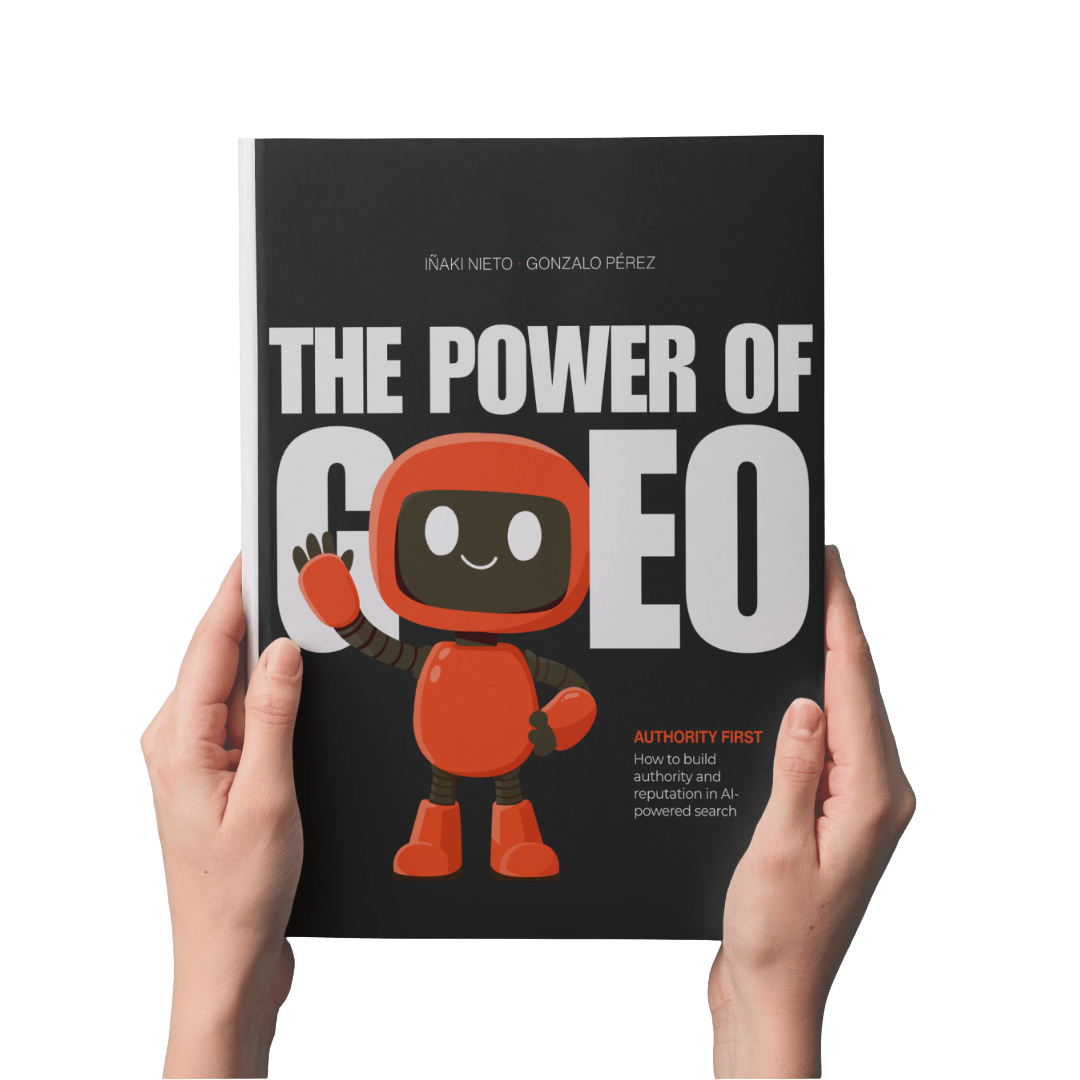



06 Apr How GEO Is Replacing Traditional SEO
A model that has defined the internet for years
For more than two decades, digital visibility has been closely tied to how search engines work. For any company, appearing on Google was not just a technical matter—it was a direct way of existing online.
SEO became the framework upon which most digital strategies were built. Learning how to structure content, understanding how pages were organized, and building website authority were almost mandatory steps to compete in that environment.
Over time, this knowledge became increasingly professionalized. Tools, methodologies, and specialized roles emerged. All of it followed the same logic: if a company managed to rank well in search engines, it gained access to a consistent source of visibility.
And for many years, that model worked.
The stability of a system that felt established
The search experience remained relatively stable for a long time. A user would enter a query, the search engine would return a list of results, and from there, an exploration process would begin.
Comparing links, opening different pages, cross-checking information—this journey became a natural part of how people accessed knowledge online.
Digital strategies adapted to that dynamic. The goal was to appear at that critical moment when the user initiated a search. If that visibility was achieved, the rest of the process depended largely on the content itself.
It was a system that felt understandable, with relatively clear rules and a logic that, while complex behind the scenes, appeared stable from the outside.
A shift that doesn’t originate in search engines
In recent years, however, a transformation has begun to take shape—one that does not originate directly from search engines, but from how people interact with information.
The emergence of artificial intelligence systems capable of generating answers has introduced a new way of accessing knowledge. Tools like ChatGPT, Perplexity, and Gemini do not present a list of links—they construct explanations based on multiple sources.
This shift changes the point of contact between users and information.
There is not always a search followed by exploration. In many cases, the answer appears directly, without the need to navigate across different pages.
From searching for information to receiving it
At first glance, the difference may seem subtle, but its implications are significant.
For years, visibility depended largely on appearing at the right moment within a list of results. In that context, competition revolved around positions: ranking higher meant a greater likelihood of being chosen.
When the experience changes, that logic changes with it.
Access to information no longer depends exclusively on navigating between pages. It begins to incorporate a layer where knowledge is already organized and presented. Users are not always choosing between options—they are receiving a synthesis.
This shift alters how visibility is built, even if it is not immediately obvious.
A new layer in the digital ecosystem
Search engines are not disappearing. They remain one of the main entry points to information. However, they are beginning to coexist with other systems that serve a different function.
While search engines organize access to pages, generative systems organize access to the knowledge contained within those pages.
Both layers depend on each other. AI systems rely on information published on the web, and search engines are starting to incorporate generative elements into their results.
The ecosystem is not being replaced—it is expanding.
When visibility no longer depends only on rankings
In this new context, appearing in search results is still important, but it is no longer the only reference point.
The way content is integrated into these new experiences begins to matter. It is not just about whether a page ranks well for a query, but how it fits into an environment where information is interpreted before it is presented.
This introduces a different dimension to digital strategy.
Decisions are no longer based solely on search optimization, but also on how to build a presence that can be recognized within this broader environment.
The beginning of a new conversation
As this shift becomes more visible, a new way of talking about digital visibility begins to emerge.
The term Generative Engine Optimization, or GEO, arises in this context. Not as a replacement for SEO, but as a way to describe an evolution that is already underway.
SEO remains necessary. The practices associated with optimization still make sense. But the framework in which they operate is expanding.
GEO does not break from what came before—it offers a broader way of understanding the current landscape.
Understanding the moment we are in
Changes on the internet rarely happen abruptly. For a period of time, different models coexist. What worked before continues to work, but it begins to share space with new dynamics.
This moment feels transitional. Many strategies still deliver results, but they begin to show limitations in certain contexts. Some decisions that were once sufficient now require a broader perspective.
Recognizing this moment does not mean abandoning what we have learned—it means placing it within a landscape that is evolving.
A transformation beyond technology
Although this shift originates in new technological developments, its impact goes beyond the technical layer.
It affects how information is accessed, how it is interpreted, and how visibility is built within that process.
Organizations that understand this shift do not necessarily do radically different things, but they begin to view their digital presence differently.
Not only in terms of positioning, but in terms of how they participate in an environment where knowledge flows in a new way.
The starting point of what comes next
The rise of GEO does not mark the end of SEO, but the beginning of a stage in which both approaches coexist.
Understanding this shift is often the first step. Not to apply immediate solutions, but to correctly interpret the context in which decisions are made.
Because when the way we access information changes, the way we build visibility changes with it.
And understanding that change is often more valuable than reacting too quickly to it.
Frequently asked questions about GEO and the evolution beyond SEO
Does this mean SEO is no longer useful?
No, SEO still matters, but it is no longer enough on its own to build visibility in today’s environment.
What exactly is GEO?
GEO (Generative Engine Optimization) is a way of understanding how visibility is built in systems that generate answers from available content.
How is GEO different from traditional SEO?
While SEO focuses on ranking pages in search engines, GEO expands the focus to how content is interpreted and integrated into generated responses.
Why is the way we access information changing?
Because AI systems allow users to receive direct answers without navigating multiple pages.
What does this change mean for digital strategies?
It means going beyond rankings and focusing on how content contributes to building a recognizable presence across different environments